
Beneficial microbes are the engine running biological soil function
Conventional crop fertility programs depend on imported fertilizer and pest management products. When soil biology is activated, a complementary production system fires up in support of crop fertility, with improved moisture retention over time.
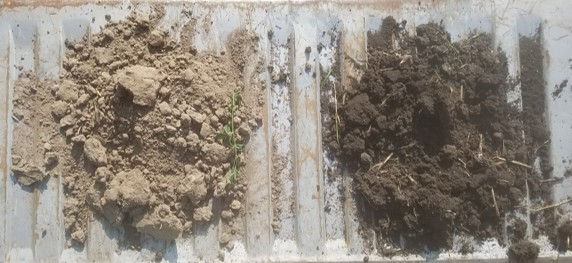
Soil Structure
Compacted and lumpy? Or stable aggregates ready to support beneficial microbes and store moisture in a deep aerobic zone? These samples were taken from adjacent fields, under different management practices.

Diverse Microbiome
Heavy disease pressure? Standing water or uniform drainage? Crop residue leftover from years back, or breaking down quickly? Manage your field microbiome to maintain nature's balance of beneficial organisms, which limit the growth of disease pathogens by competitive exclusion.
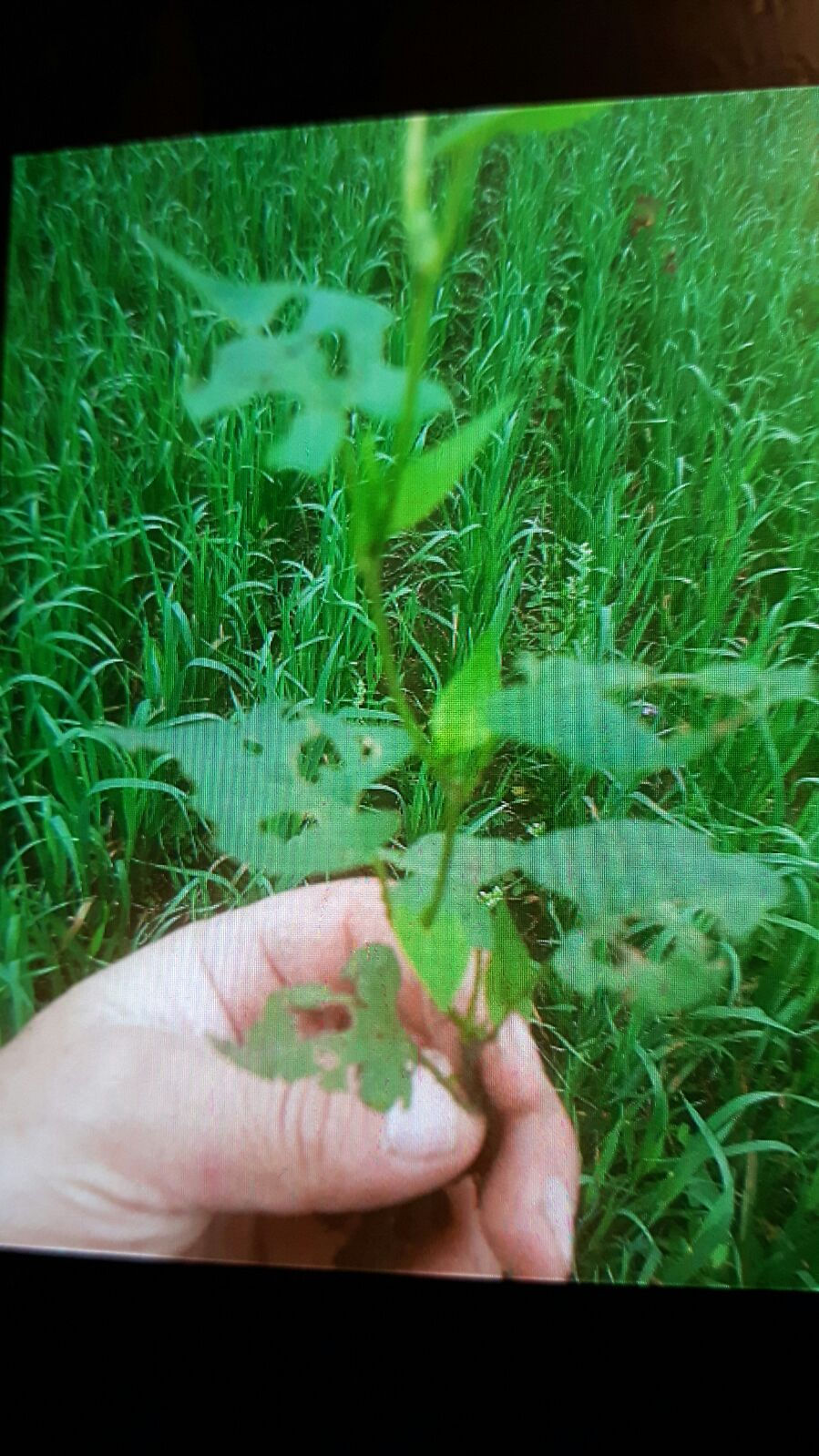
Nutrient Cycling
When structure and biodiversity are optimized, nutrients in air and soil are delivered to the crop, the crop gets efficient at turning sunshine into liquid carbon. Most sap-sucking insect pests avoid high nutrient density crops, going after the weeds instead.
boost the life in the soil, with or without cattle
Unless specific effort is made to infuse beneficial microbes, the most likely biology running this field will be disease pathogens. Cattle transfer a biodiverse army of beneficial microbes through the saliva while grazing. The beneficial microbes need to be reapplied each year through transition, as they are sensitive to fertilizer, herbicides, fungicide and pesticide repeated applications. Re-introduction of diverse and natural beneficials occupies space and resources in the field, squeezing out the pathogens right where they start. Beneficial soil microbes drive many essential, natural soil functions, including nutrient cycling, completing the carbon cycle and air exchange/respiration. According to University of Mississippi Extension Division, a single cow takes 25 to 40 thousand tongue swipes during a day of grazing, dribbling out a good part of 12 gallons of saliva produced per day onto the field.
Where grazing cattle is not an option, a similar effect can be gained by applying fermented green matter in liquid form, through the seed treater, the sprayer or liquid fertilizer kit in spring, and with the sprayer post-harvest. The ferment liquid can be produced on the farm or purchased from 180 Remediation. How you choose to deliver this vital boost to the soil is up to you, there are as many ways to get it done as there are farm operations.
We started Soil 180 in 2018 with a 6-acre saline patch. By 2025 it was down to a few hundred square feet. As of 2026, the field is pretty well uniform. N-P-K application is down 70%, from 260 lbs to 80 lbs per acre. We haven't used fungicide or pesticide in years, even with heavy pest pressure in the area. By avoiding input cost, we are still farming, and the kids are interested in farming now too. - SW Saskatchewan